
No One Warned Us
Perimenopause and the Exposure of Things You Can't Unsee

You should know that I’m writing this from the other side.
It’s not the “I’m completely healed and here’s my morning routine” other side. I’m on the other side that still has hard days, still has moments where perimenopause reminds me it’s very much not done with me, but where I’ve finally found my footing in a life that actually feels like mine. There is a lot more grace and a lot less white-knuckling than before.
So let’s start at the beginning of my story. Because no one warned us, and I think we need to start talking about it.
For reasons that I can’t fully explain, I was really looking forward to my forties. I had the idea that this was going to be my decade. That after all of the hard work and challenges of my late twenties and thirties, I would finally settle into myself with deep confidence and ease. I fantasized how it would be my highlight reel decade. And for a minute, it looked like that might actually be true.
For me, turning forty didn’t seem like anything different. I was healthy, my husband was coming out of some dark years of healing from a traumatic brain injury, and my stepson and I were very close. My career as a nurse felt meaningful and fulfilling. Nothing about turning forty felt like a crisis. In fact, it felt like an arrival.
Then I turned forty-two and something started to creep in.
It wasn’t dramatic. That’s the thing no one tells you. It’s not a single moment where everything falls apart. It’s so slow and subtle that by the time you realize what’s happening, you’ve been unraveling thread by thread for months (or even years).
For me, the first sign of perimenopause was anxiety that had no rational source. It would ramp up a little more each day, like someone gradually turning up the volume on a stereo. Then my sleep, which had never been an issue, started to get disrupted. Most mornings I was waking up hours before I needed to, heart already racing, dread sitting in my chest about a day that hadn’t even started yet. Or I would wake up in the middle of the night and not be able to go back to sleep for hours.
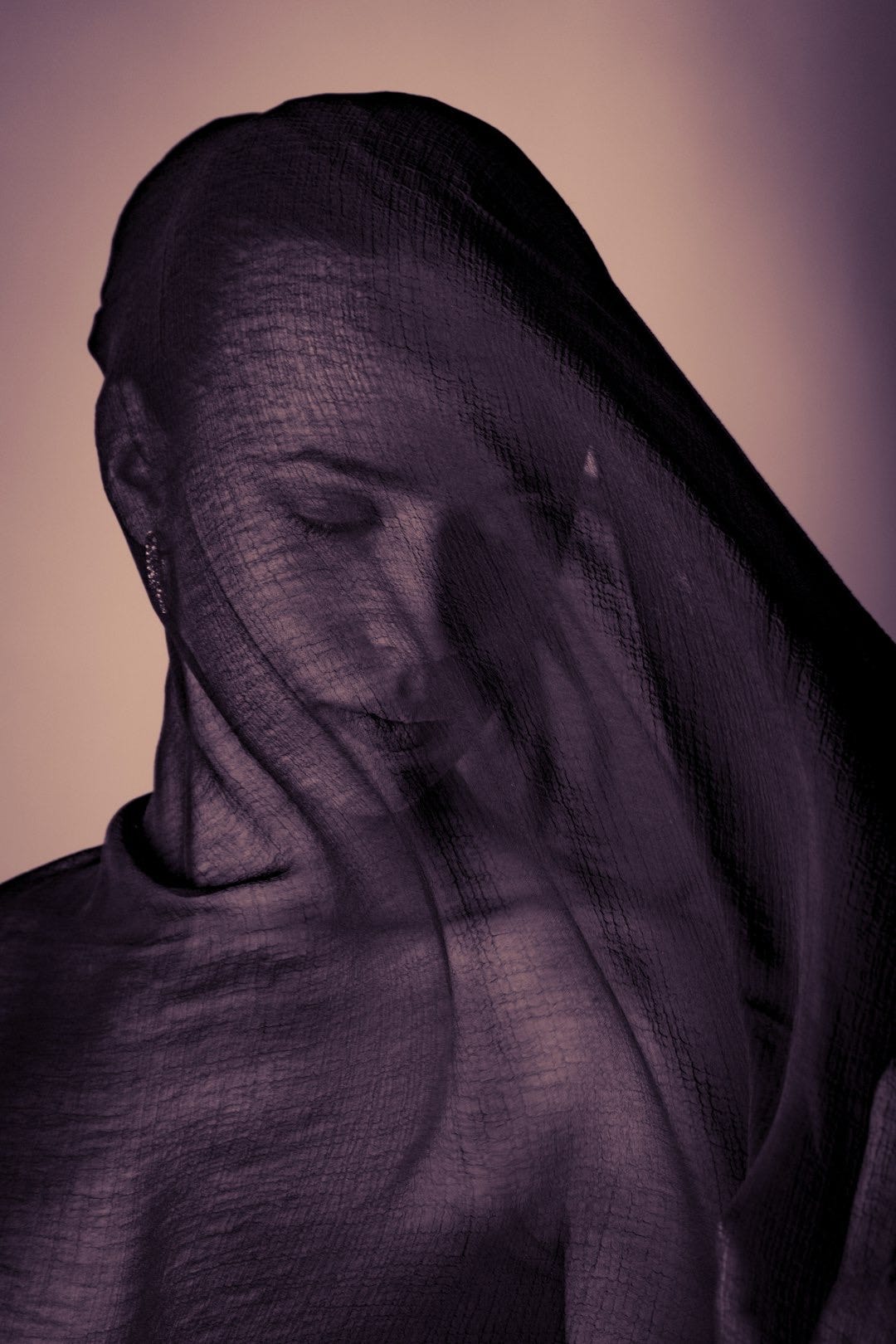
I didn’t know then that this was the beginning. Even though I am a nurse, I didn’t know that my estrogen and progesterone were starting to decline, and that with them, something was lifting — a veil I didn’t even know was there.
Estrogen and progesterone are the hormones that have defined so much of our womanhood, and I propose that they do something beyond biology. I think in some wild way they chemically reinforce the life we’ve created inside the societal expectations that were handed to us.
We have built lives of constant doing and always making sure that everyone is okay. And we can’t seem to stop measuring our worth by how much we can carry.
For decades, these hormones kept us moving through the motions of our lives without fully seeing everything for what it was. And when they start to decline, and the veil starts to lift, and what gets exposed underneath is the simple fact that you are exhausted. You have been exhausted for a long time. And you are so angry, both at the weight you’ve been carrying, and at yourself for tolerating it so willingly for so long. For feeding it. For building an entire identity around it.
That anger is complicated, because you can’t just be mad at the world. You participated. You were a willing partner in your own over-functioning. And when you finally start to see that clearly, there’s nowhere to put it.
And once you have seen it, you can’t unsee it. Even after the hormone therapy starts to help and you feel more like yourself again physically. The truth of your life is out of the box. And it doesn’t go back in.
That’s where things got especially dark for me. It didn’t happen in the dramatic way. Instead it was in a sneaky, creeping way that a woman’s midlife reckoning tends to look, which is probably why so few people talk about it honestly. For a long time there was almost nothing in our media or culture that captured what this actually feels like for women. That’s finally starting to change, but even now, what we get tends to reduce it to hot flashes and mood swings, a staggering underrepresentation of what’s actually happening.
Every part of my life — the nursing career that was pushing me into burn out, the way I was showing up in my marriage, the way I couldn’t be present with my husband and stepson because I was always chasing the next thing to do, the next person to fix, the next way to prove I was worth keeping — all of it was suddenly visible to me in a way it hadn’t been before.
I was forty-four years old, and I had no idea what I actually wanted. I only knew that I wasn’t happy, and that I had been living almost entirely for other people. At that moment, I felt like I was having a breakdown. And maybe it was, but it was also the beginning of something as well. It was the first truly honest moment that I had allowed myself in decades. And it was the catalyst to an entirely different way of living my life.
Next week we’ll get into the grief of midlife, what happens when you burn everything down, and what it actually looks like to start building something that’s yours.
If you’re reading this and something in here is landing, whether you’re in the thick of the anxiety and the sleeplessness and the why-am-I-feeling-this-way, or you’re further along and you’ve started to see the things you can’t unsee, I want to hear from you. Tell me where you are in this. Drop it in the comments, send me a message, let me know. I will read every response.
And if you’re at the place where you know something has to change, but you have no idea what or where to even start, then you are exactly who I help. We work together to help you find more ease, stop over-functioning and start setting actual boundaries in your life. And over time, we help you both figure out and get what you actually want. If you are interested, you can book a consultation call here.
Perimenopause rage can be very unsettling, especially if you are someone who has typically been pretty even-keel. If you want to explore the anger or the feelings that come up when the veil is lifted, I recommend listening to Labour - The Cacophony by Paris Paloma. You can listen to it here on Apple or here on Spotify. These lyrics echoed in my head while I wrote this. Full permission to cry or scream as you listen because this song can really pull up something in you and that is okay. This song speaks to invisible labor, depletion, and the slow burn of giving everything and getting a feeling of emptiness back.
I barely survived perimenopause! The good thing is that it led to a "surprise divorce" (because I had intense mood swings and gained weight and my professor husband found a lovely young student who adored him). I turned 50, started menopause and chose to leave immediately and begin a new life --all within a couple of weeks. I'm in my mid-60s now and I wouldn't trade this for my 40s or even any of my earlier years! Wishing all of you the kind of joy that I found on the other side!